
Primary sources used
Plain English answer
How this assessment usually works
Lower limb impairment assessment usually looks beyond the diagnosis label. The practical question is how the accepted injury affects walking, standing, stairs, kneeling, squatting, driving, gait, surgery outcome and durable work capacity.
The assessor does not decide legal liability. The assessment is a medical opinion about permanent impairment under the NSW workers compensation guidelines. The legal importance is what the percentage does to Section 66, weekly payments, medical expense time limits, settlement strategy or work injury damages preparation.
Step 1
Accepted injury
Check the accepted injury wording, body system and mechanism before looking at the percentage.
Step 2
Medical method
Check whether the correct NSW guideline method, clinical findings and records were used.
Step 3
Claim effect
Check what the WPI percentage changes before accepting a report or settlement position.
How the assessment pathway is usually built
A useful WPI report should show its working. For hip, knee, leg, ankle and foot, the pathway usually needs these steps before anyone relies on the percentage.
Identify whether the condition is hip, knee, ankle, foot, toe, ligament, meniscus, fracture, arthritis, joint replacement, nerve injury, vascular problem or amputation.
Choose the most specific clinically appropriate lower-limb method. The report should not automatically use gait or range of motion when a diagnosis-based or surgery-based method is more accurate.
Check whether the rating starts as lower extremity impairment, foot impairment or whole person impairment and whether conversion is shown correctly.
Review whether methods can be combined. Gait, atrophy, strength, nerve injury, arthritis and range-of-motion methods have combination limits.
Compare examination findings to practical duties: standing, walking, stairs, uneven ground, kneeling, squatting, driving and safe manual handling.
Assessment method points from the NSW guideline
These points are not a self-calculation tool. They are practical checks for whether the WPI report is using the right body-system method and reasoning.
Lower limb assessment uses AMA5 Chapter 17 with NSW modifications. The assessor should choose the most specific valid method, not simply the easiest one.
The method may involve diagnosis-based estimates, range of motion, arthritis, gait, nerve injury, amputation, joint replacement or other lower-limb tables.
The report should not use gait derangement loosely. It needs pathological support and should not be combined where the guideline or AMA5 cross-usage table does not permit it.
For hip and knee replacements, specific replacement tables and outcome factors may apply; the report should not rate the worker as if the joint had never been replaced.
Foot and ankle impairments may need regional conversion before WPI is stated. A bare WPI number can hide an error in the conversion path.
Arthritis, muscle atrophy, strength, peripheral nerve deficit and range-of-motion methods have combination restrictions. The report should explain the chosen pathway.
The maximum lower-limb rating is limited by the relevant amputation value unless a specific method allows a different result.
Lower limb symptoms caused by spine pathology should not be rated as a separate lower-limb impairment unless the evidence supports a distinct accepted injury.
What can change the WPI percentage
The final percentage can move because of method selection, objective findings, surgery, pre-existing deduction, or how multiple impairments are combined. These are the practical pressure points for this injury type.
- The selected lower-limb table or method and whether it is the most specific method for the accepted injury.
- Post-operative status after arthroscopy, reconstruction, fracture fixation, fusion or replacement surgery.
- Measured movement, joint stability, deformity, arthritis grade, gait derangement and use of aids, where the method permits those factors.
- Whether lower-limb impairment or foot impairment was converted to WPI correctly.
- Whether a spinal cause, non-work arthritis or previous injury has been considered without over-deducting the work contribution.
What the assessor usually checks
- accepted hip, knee, ankle, foot, ligament, meniscus, fracture or replacement injury wording
- whether imaging and surgery records match ongoing symptoms
- movement, stability, gait, use of aids and work function
- whether arthritis or degeneration is being treated as unrelated despite work aggravation evidence
- whether multiple lower-limb problems are assessed together or separated correctly
Evidence that may help
A useful WPI report depends on the material the assessor receives. These records often matter for hip, knee, leg, ankle and foot:
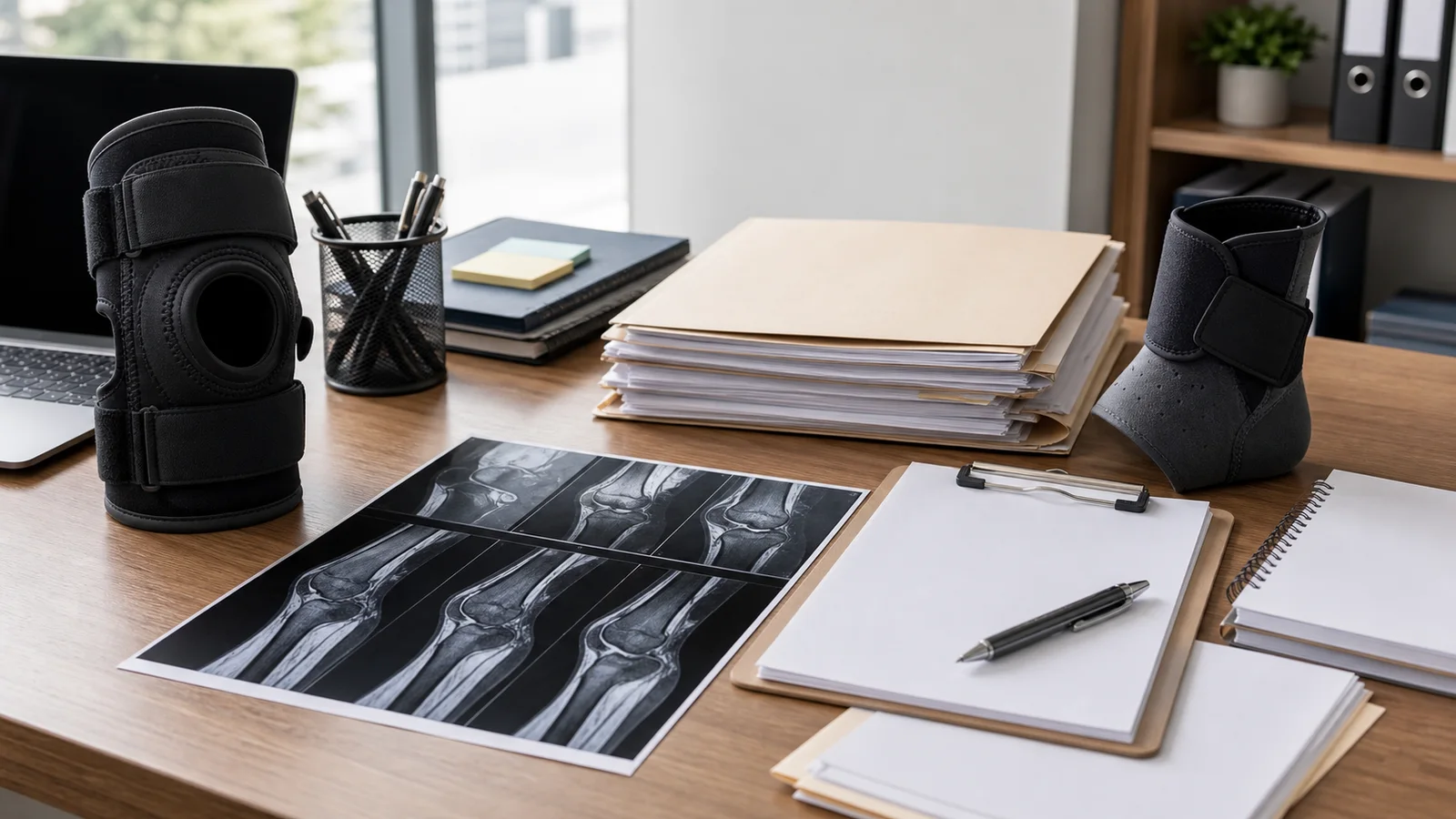
- MRI, X-ray, arthroscopy, replacement or fracture records
- orthopaedic, rehabilitation physician, physiotherapist and GP reports
- capacity certificates covering walking, standing, kneeling, stairs, driving and lifting
- worksite material showing standing tasks, uneven ground, ladders, deliveries or manual handling
- records of failed suitable duties or recurrent flare-ups after return to work
Common insurer or report disputes
- the insurer says arthritis is the real cause
- the assessment ignores gait, instability or repeated swelling
- surgery outcome is described as successful even though function remains restricted
- work capacity is assumed because the worker can walk short distances
- a combined injury is split in a way that understates overall functional effect
Report cautions before relying on the percentage
Report red flags
- A lower-limb WPI is stated without showing the regional impairment and conversion calculation.
- A worker with a knee replacement, ACL reconstruction or fracture fixation is assessed without operation notes or updated orthopaedic review.
- Gait is used as a rating method simply because the worker limps, without explaining pathology and combination limits.
- The report treats capacity to walk briefly in the examination room as proof of durable work capacity.
Method and reliance checks
- Does the report identify whether the rating is WPI, lower extremity impairment or foot impairment before conversion?
- Does it avoid combining methods that the NSW guideline or AMA5 cross-usage rules do not permit?
- If arthritis or degeneration is mentioned, does the report explain work aggravation and any deduction?
- Does the examination match standing, walking, stairs, kneeling and safe-duty evidence?
- Does the report explain the surgery outcome and whether MMI has been reached after rehabilitation?
- If gait derangement is used, does the report explain why it is clinically appropriate and not double-counting another method?
- Being able to walk a short distance does not necessarily answer durable work capacity, but WPI and work capacity remain different questions.
- A successful operation can still leave permanent impairment, but the report must explain the remaining impairment method.
- The maximum lower-limb rating is limited by the relevant amputation value.
Guideline notes
- NSW lower extremity assessment modifies AMA5 Chapter 17.
- Where several methods are available, the assessor should use the most clinically accurate permitted method and explain combination rules.
Questions to ask when the report comes back
How this connects to thresholds and strategy
SIRA says permanent impairment compensation generally requires 11% or more permanent impairment for physical injury, and 15% or more for primary psychological injury. Secondary psychological injury is treated differently. Those thresholds are not a payout promise; they are eligibility and strategy checkpoints that need to be applied to the accepted injury and current evidence.
A low WPI opinion may also affect weekly-payment planning, treatment time-limit issues, dispute posture, and whether work injury damages threshold advice is required. The safest approach is to review the method, evidence and consequences before signing or letting the insurer rely on a weak assessment.
Questions workers often ask
Is hip, knee, leg, ankle and foot assessed the same way as every other injury?
No. NSW permanent impairment assessment depends on the accepted injury, body system, medical evidence, maximum medical improvement and any NSW-specific guideline modification. The assessment method for hip, knee, leg, ankle and foot should be checked against the injury actually accepted in the claim.
Can I calculate the WPI percentage myself?
No. A trained permanent impairment assessor must perform the assessment. A worker can still check whether the report used the correct injury description, records, body system, causation assumptions and deduction reasoning.
What if the insurer report seems too low?
Ask for the report and the material sent to the assessor. For hip, knee, leg, ankle and foot, compare the report against treating records, imaging, specialist material, work duties and certificates of capacity before accepting the percentage or relying on it for settlement strategy.
Does maximum medical improvement matter?
Yes. SIRA guidance says permanent impairment assessment should occur when the condition has stabilised and is unlikely to change substantially in the next year with or without treatment. If treatment is incomplete, the timing may need review.
General information only
This information is general in nature and is not legal advice. You should obtain advice about your own circumstances before relying on a WPI percentage, accepting a lump sum offer, or responding to an insurer decision.
Reviewed by NSW Work Injury Claims - a branch of Stephen Young Lawyers.
Related injury and impairment pages
Need a WPI assessment checked?
If the percentage does not match the accepted injury, treatment history, imaging, surgery, work duties or current restrictions, get the report checked before accepting the insurer position.